
Urban Mining: Why Your Business Could Be Sitting on a Tech Goldmine
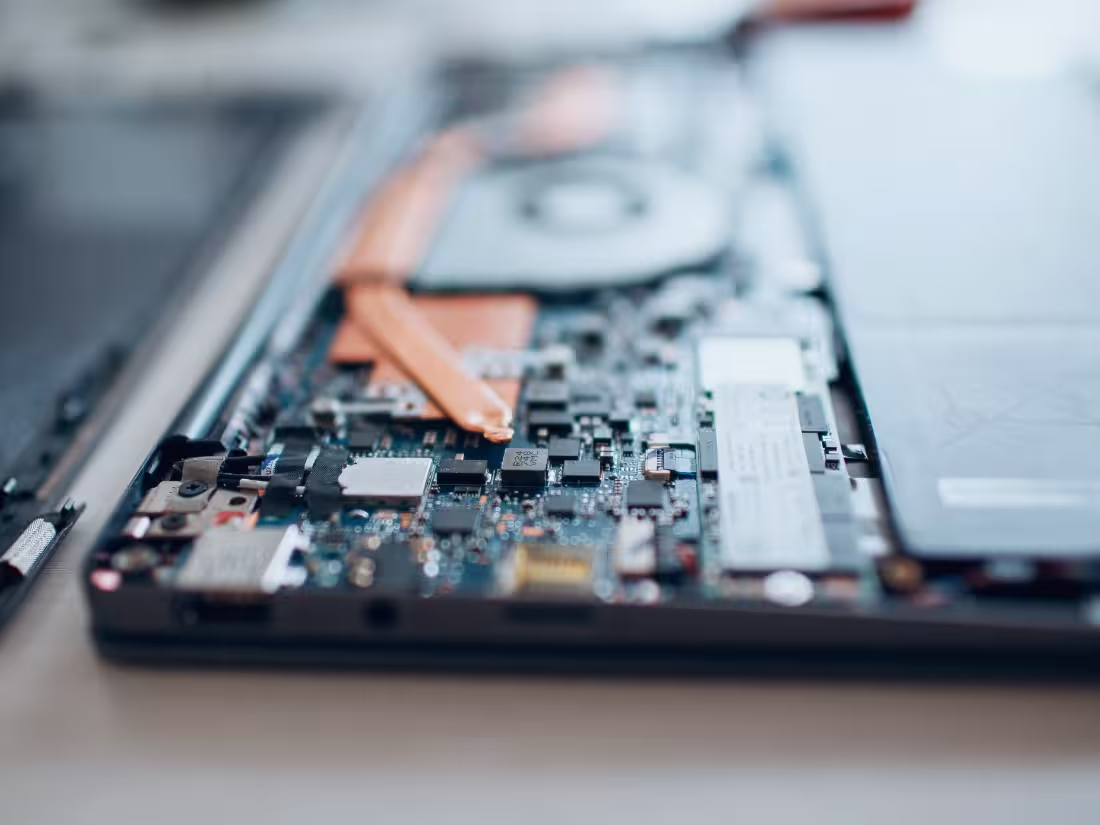
As demand grows for the materials used to manufacture modern technology, attention is increasingly turning towards the value locked away inside end-of-life devices. From laptops and desktops to networking equipment and servers, the technology businesses no longer need could play an important role in supporting a more circular economy.
This concept is known as urban mining.
The Growing Demand for Critical Materials
Every laptop, desktop, server, mobile phone, and network device contains a range of valuable materials.
Gold, silver, copper, palladium, cobalt, and rare earth elements all play a role in modern technology and the manufacture of devices. As demand for new devices continues to grow, so does demand for the materials needed to manufacture them.
The challenge is that many of these resources are finite, difficult to extract, and increasingly expensive to source. At the same time, approximately 62 million tonnes of electronic waste were generated globally in 2022, with this figure set to increase annually, much of it containing recoverable materials.
This is where the concept of urban mining comes in.
What Is Urban Mining?
Urban mining is the process of recovering valuable materials from existing products, rather than extracting new raw materials from the earth.
In simple terms, old IT equipment becomes a source of reusable materials.
Circuit boards, processors, cables, batteries, and other components can all contain materials that can be recovered and reintroduced into manufacturing supply chains. Instead of viewing redundant IT as waste, organisations are beginning to see it as part of a circular economy where equipment, components, and materials continue to create value long after their original use.
In fact, studies have shown that discarded electronics can contain significantly higher concentrations of valuable metals than many traditional mining operations. What appears to be obsolete hardware may still hold considerable value when processed through the correct recovery channels.
Why This Matters for Businesses
For many organisations, sustainability targets are becoming just as important as operational targets.
Customers, investors, and stakeholders increasingly want to understand how businesses manage resources and reduce waste. While attention is often focused on energy consumption and carbon emissions, the way a business handles its end-of-life IT equipment can also play an important role.
Keeping redundant devices in storage provides no environmental benefit and creates unnecessary security risks. By ensuring equipment is either reused, refurbished, remarketed, or responsibly recycled, businesses can contribute to a more circular approach to technology management.
In many cases, devices that are no longer suitable for one organisation still have plenty of life left in them.
Urban Mining, ESG and Scope 3 Emissions
Environmental, Social and Governance (ESG) reporting is becoming an increasingly important consideration for organisations of all sizes.
As businesses look for ways to improve their sustainability performance, attention is shifting towards Scope 3 emissions, the indirect emissions generated throughout a company's value chain. While discussions around Scope 3 often focus on transport, procurement, and supply chains, technology assets are becoming part of the conversation too.
The manufacture of laptops, desktops, servers, and networking equipment requires significant amounts of energy, raw materials, and natural resources. Every device that can be refurbished, redeployed, remarketed, or responsibly recycled helps support a more circular economy and reduces the reliance on newly extracted materials.
While urban mining alone won't solve an organisation's sustainability challenges, it can form part of a wider ESG strategy by helping businesses demonstrate responsible resource management and more sustainable handling of end-of-life technology assets.
Urban Mining and ESG Reporting
As ESG reporting requirements continue to evolve, organisations are under increasing pressure to demonstrate measurable sustainability outcomes rather than broad environmental commitments.
Responsible IT asset disposal can form part of this story.
When redundant equipment is refurbished, redeployed, remarketed, or processed for material recovery, businesses are helping to keep valuable resources in circulation for longer. This not only reduces electronic waste but also supports the principles of the circular economy, which is becoming a key focus area for many sustainability frameworks.
For organisations tracking environmental performance, having a clear and auditable process for managing end-of-life IT assets can provide valuable evidence of responsible resource management and support wider ESG initiatives.
Security Must Come First
Of course, sustainability should never come at the expense of security.
Before any equipment can be refurbished, reused, recycled, or broken down for material recovery, any data it contains must be handled correctly.
Hard drives, SSDs, servers, laptops, and other storage devices can all hold sensitive business information long after they have been retired from service. That's why certified data destruction should always form part of any IT asset disposal process.
A secure chain of custody and auditable destruction process ensures organisations can participate in the circular economy without introducing unnecessary compliance or security risks.
Reuse Before Recycling
One of the most sustainable outcomes for any piece of IT equipment is continued use.
Where appropriate, devices can often be refurbished, redeployed, remarketed, or donated rather than immediately recycled. Extending the lifespan of technology reduces demand for new manufacturing and helps maximise the value already invested in the equipment.
For businesses, this can also improve return on investment from technology assets while supporting wider sustainability objectives. Only once a device has genuinely reached the end of its usable life should material recovery and recycling become the next step.
When IT equipment reaches the point where it can no longer be reused, it doesn't simply become waste. Through our ITAD and recycling services, we recover all precious materials from redundant devices, helping to keep valuable resources in circulation and reducing the need for new raw materials.
Looking at Redundant IT Differently
The conversation around end-of-life IT is changing.
What was once viewed simply as electronic waste is increasingly being recognised as a source of valuable materials, reusable technology, and sustainability opportunities.
Whether it's a single cabinet of retired laptops or a large-scale IT refresh project, organisations have an opportunity to handle redundant equipment in a way that supports security, compliance, and environmental goals at the same time.
The next time you walk past a stack of old devices waiting to be dealt with, it may be worth asking a different question.
Are you looking at waste, or are you looking at a resource?

Similar Insights
Practical knowledge, industry trends, and security insights, helping you make smarter IT decisions.






.avif)
.svg)