The RAM Crisis: Why AI Is Making Tech More Expensive
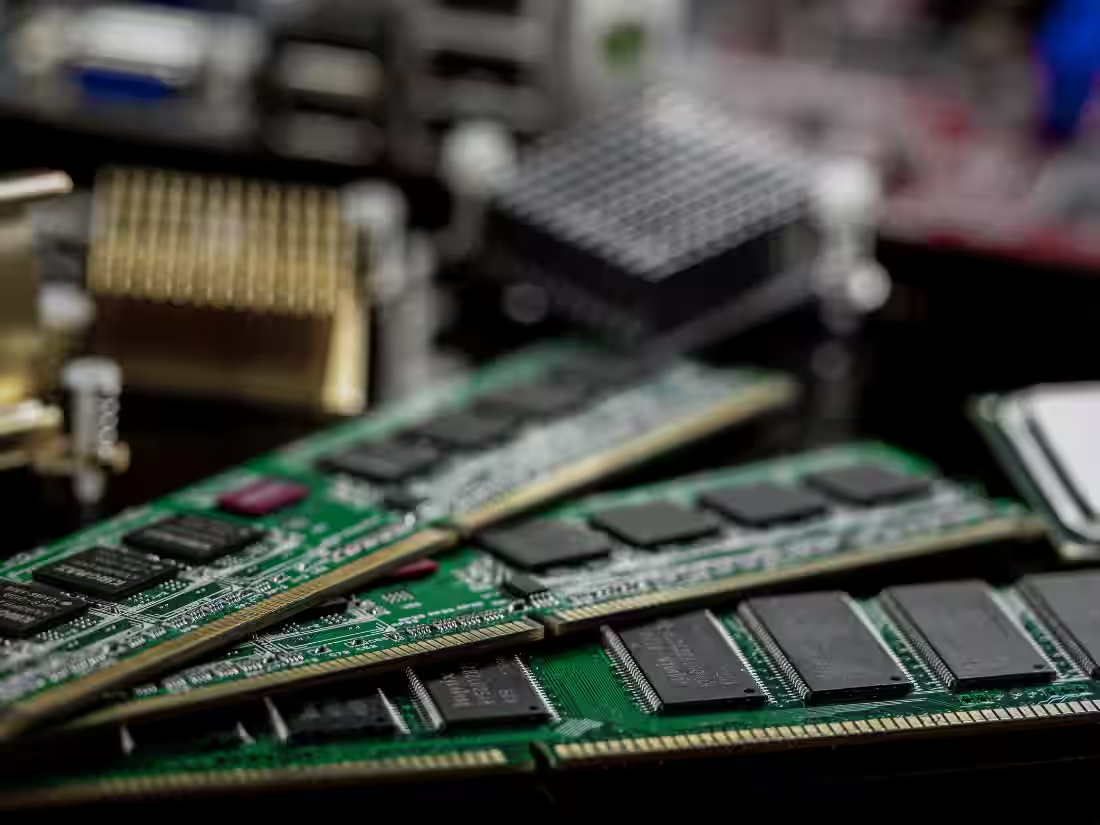
The AI boom has created a strange problem for anyone buying a computer in 2026. The technology behind ChatGPT, Gemini and other AI services is becoming increasingly powerful, but the infrastructure needed to run it is also putting pressure on some of the components found inside ordinary laptops and PCs.
One of the biggest problems is memory.
You might not think much about RAM when buying a laptop. Processor speed, storage capacity, screen size and battery life are usually much more visible when comparing different models, but RAM is becoming a much more important part of the cost of a computer, partly because the same global memory supply chain is being pulled in two directions.
AI data centres need enormous amounts of memory, and manufacturers are prioritising the products that serve that market. That is contributing to shortages and rising prices for conventional memory used in PCs, servers, smartphones and other electronics.
The result is a problem that could affect businesses just as much as the companies building AI infrastructure: the next generation of computers could cost more, while existing computers become more expensive to replace.
What does RAM have to do with AI?
RAM, or random access memory, is essentially a computer's short-term working memory. It holds the information a processor needs to access quickly, allowing you to run applications, switch between programmes and work with large amounts of data without constantly relying on slower storage.
AI systems have much more demanding memory requirements than the typical office laptop.
Large AI models need huge amounts of high-speed memory to process information efficiently, while the data centres running those systems also require conventional DRAM and large amounts of storage. This has created a huge increase in demand for memory across the technology industry.
There is an important distinction here. The memory used for AI workloads is not necessarily identical to the RAM installed in your laptop, but the products are part of the same broader semiconductor manufacturing ecosystem. Manufacturers have limited production capacity, so when demand for higher-margin server memory and high-bandwidth memory increases, less capacity can be available for other parts of the market.
J.P. Morgan estimates that AI data centre construction and hyperscaler demand are absorbing a disproportionate share of global memory capacity. It expects DRAM prices to have risen by more than 400% between the start of 2024 and the end of 2026.
That is an extraordinary increase for a component that most people rarely think about.
Your next laptop could cost considerably more
The effect is already reaching the PC market.
In February, Gartner estimated that combined DRAM and SSD prices would increase by 130% by the end of 2026 compared with 2025, contributing to a projected 17% increase in PC prices. Gartner also expected memory to account for around 23% of a PC's bill of materials, compared with 16% in 2025.
Since then, the situation has continued to affect the market.
Gartner reported in October that worldwide PC shipments fell 22.4% year on year in the third quarter of 2026, with higher memory and storage costs now fully reflected in PC pricing. DRAM costs had surged fivefold year on year in the second quarter, and manufacturers were responding by passing those higher component costs on to customers, prioritising more expensive configurations and reallocating scarce components.
TrendForce's September analysis also expects conventional DRAM contract prices to rise another 10% to 15% during the fourth quarter of 2026, with NAND Flash prices increasing by 15% to 20%. It expects PC DRAM supply to remain tight into 2027 as more capacity is directed towards server applications.
For someone buying a laptop, this can create a frustrating situation. You may not be buying an AI computer, using AI software locally or doing anything particularly demanding, but you are still buying a device made from components that are increasingly valuable to the companies building AI infrastructure.
The cheaper end of the market is being squeezed
This is particularly significant for lower-cost computers.
Gartner has warned that the traditional sub-$500 PC market could disappear by 2028 because manufacturers will struggle to absorb rising memory costs while maintaining the margins needed to make cheaper devices viable.
Manufacturers have other ways of responding, too. TrendForce reports that PC brands are reducing SSD capacities in some mainstream models to lower manufacturing costs, while buyers are increasingly considering lower-capacity memory configurations to keep prices under control.
That means the impact of the memory shortage is not necessarily going to appear as a simple price increase on every laptop.
It could also mean that a computer at a particular price point comes with less RAM or storage than it would have previously, while higher-specification models become increasingly expensive.
For businesses buying hundreds of machines, those differences can quickly become significant.
What does this mean for businesses replacing their IT?
For a business with a few hundred employees, an increase in the cost of every laptop can have a substantial effect on the IT budget.
A refresh involving 500 laptops at £800 each would cost £400,000 before any additional deployment, configuration or support costs. If hardware prices rise, the same refresh could require considerably more budget, or force a business to reconsider the specification and timing of the replacement programme.
Gartner has already advised enterprise PC buyers to review purchasing plans and budgets because of the memory shortage, while its January research highlighted extending hardware lifespans and considering third-party memory and SSD options as potential ways of managing higher infrastructure costs.
There is also a more interesting consequence.
If new computers are becoming more expensive, keeping existing ones in service for longer starts to make much more financial sense.
Gartner expects PC lifespans to increase by 15% for business buyers by the end of 2026 as higher prices encourage businesses to delay upgrades.
That does not mean businesses should keep every old laptop indefinitely. Security requirements, software compatibility, performance and reliability still matter, but it does make the question of whether a device genuinely needs replacing much more important.
Do you actually need a new computer?
The memory shortage also raises an interesting question about the way businesses approach hardware upgrades.
There is a lot of attention around AI PCs at the moment, with manufacturers increasingly marketing devices with dedicated processors and features designed to run AI workloads locally. For some users, that additional capability will be useful, particularly as more software begins to make use of on-device AI.
For many ordinary office workers, however, the situation is less straightforward.
Someone who spends most of their working day using Outlook, Teams, Excel, a web browser and a handful of business applications may not see a dramatic productivity benefit from replacing a perfectly functional computer simply because a newer model has better AI capabilities.
The important question is therefore not whether a newer computer is available. There will always be a newer computer available.
The more useful question is whether the computer currently being used can still do the job reliably, securely and efficiently.
If it can, the current memory shortage gives businesses another reason to think carefully before replacing it.
Refurbished technology becomes more attractive
This is where the refurbished IT market could become particularly interesting.
A business does not necessarily have to choose between buying brand-new equipment and keeping an ageing fleet in service. Refurbished business hardware can provide another option, particularly when devices have plenty of useful life remaining but are no longer suitable for their original user or environment.
A laptop that has been securely wiped, tested, refurbished and quality checked can potentially be redeployed elsewhere in a business, sold into another market or donated, rather than immediately becoming waste.
That becomes even more relevant when the cost of new hardware is increasing.
If a business can extend the useful life of some existing devices, redeploy equipment between teams or choose professionally refurbished hardware for less demanding users, it can reduce the number of new machines it needs to purchase while still maintaining an effective IT estate.
There is an environmental benefit here as well. Extending the life of an existing computer avoids some of the environmental impact associated with manufacturing and transporting a replacement, while keeping usable equipment in circulation for longer.
The memory shortage could change how we think about IT refreshes
The current situation is unlikely to be solved simply by producing a few more memory chips.
Reuters reported in September that manufacturers were preparing for a memory shortage that could continue through 2027, with supply availability becoming a bigger constraint and broader normalisation not expected until 2028 or later.
The technology industry is also continuing to invest heavily in AI infrastructure. Gartner's latest IT spending forecast estimates that worldwide data centre systems spending will grow by almost 74% in 2026, with AI infrastructure and software driving much of that investment. Gartner says memory-related inflation is already cascading through storage, server, networking and PC supply chains.
For businesses, that makes the traditional approach of replacing large numbers of computers on a fixed timetable increasingly difficult to justify.
Instead, IT refreshes may need to become more selective.
Some devices will genuinely need replacing because they are no longer secure, supported or capable of running the software required by their users. Others may be perfectly capable of another year or two of service. Some could be upgraded, reassigned to less demanding roles or refurbished for another user.
The ability to make those distinctions becomes much more valuable when new hardware is expensive and availability is less predictable.
Getting more from the technology you already own
The AI boom is creating enormous opportunities, but it is also putting pressure on parts of the technology supply chain that businesses have historically taken for granted.
Memory is a good example. A component that most users rarely think about has become one of the factors pushing up computer prices and changing the economics of hardware replacement.
Knowing what equipment you have, where it is, what condition it is in and whether it still has useful life allows you to make better decisions when the time comes for an IT refresh. Devices that are no longer suitable for one role may still be valuable somewhere else, while equipment that genuinely has reached the end of its useful life can be securely disposed of, with data destroyed and materials recovered wherever possible.
AI may be changing what new computers can do, but that does not necessarily mean every existing computer needs to be replaced.
With memory prices under pressure and hardware costs continuing to rise, getting more life from the technology you already own could turn out to be one of the smartest ways to manage your next IT refresh.
At Rapid IT, we help businesses manage the full lifecycle of their IT equipment, from deployment and relocation through to secure IT asset disposal, data destruction, refurbishment, reuse and recycling.

Similar Insights
Practical knowledge, industry trends, and security insights, helping you make smarter IT decisions.